Introduction
Dining rooms are more than places to enjoy meals. They are spaces where families gather, friends share conversations, and special occasions become memorable experiences. While furniture, lighting, and color schemes help establish the atmosphere, wall decorations also play an important role in shaping the room’s appearance. Choosing the right dining area artwork can make an ordinary dining space feel inviting, elegant, and full of personality.
From oversized paintings and modern abstract prints to nature-inspired illustrations and decorative wall arrangements, there are countless ways to introduce artistic details into your dining room. The best choice depends on your interior design style, available wall space, furniture, and personal preferences.
Whether you have a spacious formal dining room or a compact dining corner connected to your kitchen, thoughtful artwork can enhance the overall design without requiring an expensive renovation. In this guide, we explore creative dining area artwork ideas, practical placement tips, popular styles, and simple ways to create a balanced and attractive dining environment.
Why Dining Area Artwork Matters
Artwork can influence how a dining room looks and feels. An empty wall may make the space appear unfinished, while carefully selected decorative pieces can establish a focal point and connect different design elements.
Here are several reasons to incorporate artwork into your dining area.
1. Creates an Attractive Focal Point
A striking piece of artwork can immediately draw attention when someone enters the dining room. Placing a large painting above a dining table or buffet cabinet creates a natural center of interest.
The artwork does not have to feature complicated details or expensive materials. A simple landscape, colorful abstract painting, or elegant botanical print can provide enough visual interest to make the room feel complete.
2. Reflects Your Personal Style
Decorative artwork offers an opportunity to express your taste. Some homeowners prefer minimalist prints, while others enjoy traditional paintings, cultural designs, or contemporary photography.
Selecting artwork that reflects your personality makes the dining area feel more individual rather than resembling a standard furniture showroom.
3. Connects Different Design Elements
A well-chosen artwork can bring together the room’s colors, textures, and materials. For example, a painting featuring beige, green, and brown tones can complement wooden furniture, neutral walls, and indoor plants.
This approach helps create a coordinated interior without requiring every decorative item to match perfectly.
4. Makes the Room Feel More Welcoming
Dining areas are associated with hospitality, conversation, and shared experiences. Artwork depicting nature, food, abstract patterns, or peaceful landscapes can contribute to a comfortable atmosphere where guests enjoy spending time.
Popular Dining Area Artwork Ideas
Different artwork styles suit different interiors. Before purchasing decorative pieces, consider the overall appearance of your home and the atmosphere you want to create.
1. Modern Abstract Artwork
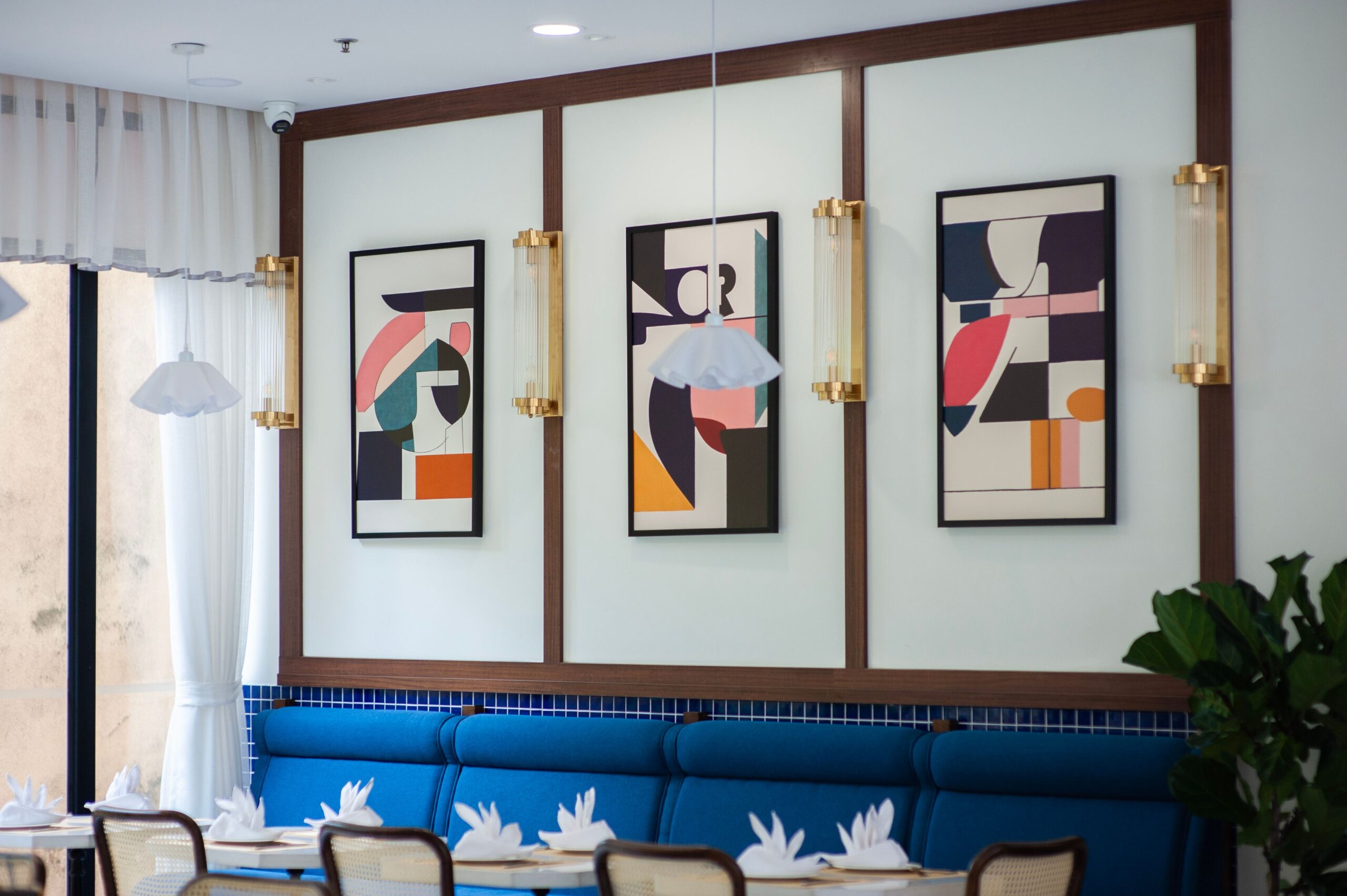
Abstract artwork is an excellent option for contemporary dining rooms. It uses shapes, lines, colors, and textures to create visual interest without relying on recognizable subjects.
A large abstract canvas can complement modern furniture, pendant lighting, and simple architectural details. Neutral abstract designs work particularly well in minimalist spaces, while colorful compositions can introduce energy into an otherwise understated room.
When selecting abstract artwork, consider the colors already present in your dining area. Repeating one or two existing shades can help the piece feel connected to the rest of the interior.
2. Nature-Inspired Wall Art
Nature-inspired artwork introduces a calm and refreshing quality to dining spaces. Popular options include botanical illustrations, floral paintings, forest landscapes, and images of leaves or branches.
These designs are especially suitable for rooms featuring wooden furniture, natural fabrics, indoor plants, or earthy color palettes.
For a cohesive appearance, choose frames that complement your furniture. Light wood frames can create a relaxed atmosphere, while black frames provide a sharper contemporary finish.
3. Large Statement Paintings
A large painting can transform a plain dining room wall into a distinctive design feature. Instead of arranging numerous small decorations, you can use one substantial piece to establish the room’s visual identity.
Statement artwork works particularly well above a dining table, sideboard, or console cabinet.
Choose a painting that suits the scale of the wall and furniture. A piece that is too small may look disconnected, while artwork that overwhelms the available space can make the room feel crowded.
Large artwork is particularly effective when the surrounding walls remain relatively simple.
4. Black-and-White Photography
Black-and-white photography offers a timeless option for dining room decoration. Architectural photographs, city scenes, portraits, and nature images can all complement contemporary interiors.
The monochromatic color scheme makes it easier to coordinate photographs with different furniture finishes and wall colors.
You can display one large photograph for a minimalist look or arrange several smaller prints in a carefully planned gallery wall. Matching frames create consistency, while different frame sizes introduce a more relaxed appearance.
5. Traditional and Cultural Artwork
Traditional paintings and culturally inspired designs can give a dining room a distinctive identity. Depending on your preferences, you might select handcrafted artwork, regional landscapes, decorative calligraphy, or traditional motifs.
These pieces often work beautifully in dining rooms featuring carved wooden furniture, warm lighting, patterned textiles, or classic architectural details.
The key is to display cultural artwork thoughtfully. Give each piece enough surrounding space so its details remain visible and appreciated.
Tips for Selecting the Perfect Artwork for Your Dining Space
Finding attractive artwork is only part of the process. The piece should also fit the room’s dimensions, color scheme, and practical requirements.
Consider the Wall Size
Measure the wall before selecting artwork. A large, empty wall can accommodate a substantial painting or a coordinated collection of prints, whereas a narrow wall may benefit from a vertical piece.
For artwork displayed above a dining table, a useful starting point is to choose a piece approximately two-thirds to three-quarters of the table’s width. This proportion often creates a balanced appearance, although the ideal dimensions depend on the room layout and surrounding furniture.
Match the Existing Color Palette
Your artwork should complement the room without making every color identical.
For example:
Beige and cream interiors pair well with earthy landscapes and muted abstract designs.
White dining rooms can accommodate colorful paintings or simple monochromatic prints.
Dark green walls work nicely with botanical artwork and warm metallic frames.
Wooden furniture often complements nature photography and artwork featuring warm neutral shades.
Contemporary gray interiors can benefit from bold colors or black-and-white compositions.
Repeating a small number of existing colors can create harmony without making the room look overly coordinated.
Think About the Mood
Different subjects create different impressions. Soft landscapes and botanical illustrations may establish a relaxed atmosphere, while bright abstract paintings can make the dining area feel lively.
Consider how you typically use the space. A formal dining room might benefit from elegant, understated artwork, while a family dining area could accommodate playful illustrations or colorful prints.
Choose Frames Carefully
Frames influence how artwork relates to the surrounding interior. Wooden frames introduce warmth, black frames create definition, and metallic finishes can add a decorative accent.
You can also choose frameless canvas paintings for a more contemporary appearance.
For a gallery wall, using similar frames helps unify different images. Alternatively, combining several complementary frame styles can create an eclectic arrangement.
Best Places to Display Dining Area Artwork
Artwork can be displayed in several locations throughout a dining room. The best position depends on the furniture arrangement, wall dimensions, and available space.
Above the Dining Table
The wall directly behind or above the dining table is often the most natural place for a statement piece. It creates a visual connection between the table and the surrounding interior.
Position the artwork so it appears centered with the table rather than simply centered on the entire wall. This helps the arrangement feel intentional.
If people regularly sit beneath the artwork, secure heavy frames properly and avoid projections that could create a safety hazard.
Above a Sideboard or Buffet
A sideboard provides an excellent foundation for a decorative arrangement. You can hang a large painting above it or combine framed prints with a table lamp, vase, or small sculptural object.
Keep the arrangement balanced by considering the width and height of the furniture. Avoid adding so many accessories that the artwork becomes difficult to appreciate.
On an Empty Accent Wall
A blank wall can become a gallery-style feature with a carefully arranged collection of artwork.
You might combine botanical prints, abstract paintings, photographs, or illustrations around a consistent theme. Lay out the arrangement on the floor before hanging the frames to check their spacing and overall proportions.
In a Small Dining Corner
Compact dining spaces benefit from artwork that adds personality without occupying valuable floor space.
One medium-sized print, a slim vertical painting, or a pair of coordinated frames can make a breakfast nook feel more complete.
Avoid overly complicated arrangements if the area already contains shelves, pendant lights, or decorative furniture.
Dining Area Artwork for Different Interior Styles
The most effective artwork choices usually reflect the overall character of the room.
| Interior style | Recommended artwork | Suitable frame choices |
| Modern | Abstract paintings and geometric prints | Black, metal, or frameless |
| Minimalist | Simple line drawings and muted photography | Thin black or natural wood |
| Farmhouse | Landscapes, botanical illustrations, and rustic prints | Distressed or natural wood |
| Traditional | Classic paintings and decorative compositions | Ornate wood or gold-toned |
| Scandinavian | Nature prints and understated abstract art | Pale wood or white |
| Industrial | Urban photography and bold graphic artwork | Black metal |
| Bohemian | Colorful illustrations and eclectic gallery walls | Mixed natural finishes |
These suggestions are starting points rather than strict rules. Combining different styles can also work when the colors, proportions, and materials complement one another.
Creative DIY Dining Area Artwork Ideas
Decorating your dining room does not always require purchasing expensive paintings. Several do-it-yourself projects can produce attractive results at a reasonable cost.
Create a Personal Gallery Wall
Print your favorite photographs, select complementary images, and place them in matching frames. Family memories, travel photographs, nature scenes, and artistic illustrations can create a meaningful collection.
For a more polished appearance, maintain consistent spacing and align the frames around a central point.
Display Fabric or Textile Art
Decorative fabric, woven wall hangings, and framed textile designs introduce texture that traditional prints may not provide.
Textile artwork can be particularly effective in relaxed interiors featuring wooden furniture, neutral upholstery, and natural materials. Keep delicate fabrics away from food splashes and excessive moisture.
Make Your Own Abstract Painting
Creating a simple abstract painting allows you to choose colors that match your dining room exactly.
Start with a suitable canvas, select two or three complementary colors, and experiment with broad brushstrokes or geometric shapes. The design does not need to be complicated to look attractive.
Frame Printable Artwork
Affordable prints can offer an alternative to original paintings. Choose high-resolution images from sources that permit printing and personal use, then place them in frames suited to your interior.
This option also makes it easy to update your dining room decorations when your preferences change.
Common Mistakes to Avoid When Choosing Dining Area Artwork
Even attractive artwork can look out of place when it is selected or displayed incorrectly.
Choosing artwork that is too small: Tiny prints may disappear on a large wall. Consider the dimensions of the wall and furniture before making a purchase.
Ignoring the existing color scheme: Artwork that clashes with the room’s dominant colors may disrupt the overall appearance. Choose complementary shades or use contrasting colors deliberately.
Hanging pictures too high: Artwork often looks disconnected when positioned close to the ceiling. Place it at a comfortable viewing height and adjust the position to suit the furniture beneath it.
Overcrowding the walls: Too many decorative pieces can make the dining area feel busy. Leave enough empty space around each artwork so individual pieces remain visible.
Forgetting practical maintenance: Dining rooms can expose artwork to cooking residue, moisture, and accidental splashes. Choose suitable locations, clean frames regularly, and protect delicate materials.
Using poor-quality prints: Blurry images, damaged frames, and faded colors can reduce the impact of an otherwise attractive design. Select clear prints and materials appropriate for the space.
How to Maintain Your Dining Room Artwork
Proper maintenance helps decorative pieces retain their appearance over time.
Dust frames and accessible surfaces with a soft, dry cloth. Follow the manufacturer’s instructions when cleaning glass, acrylic, or specialty finishes.
Avoid placing valuable artwork where it receives strong direct sunlight for extended periods, as light can cause fading. If your dining area is connected to the kitchen, keep delicate paintings away from heat, steam, and grease.
Use appropriate wall fixings based on the weight of the frame and the type of wall. Check the mounting occasionally, especially when displaying heavier pieces above frequently used areas.
For original paintings, valuable prints, or delicate textiles, consider professional framing and protective glazing when appropriate.
Frequently Asked Questions
1. What type of artwork is best for a dining area?
Abstract paintings, botanical prints, landscape artwork, and black-and-white photography are popular options. The best choice depends on your interior style, available wall space, and preferred atmosphere.
2. What size artwork should I place above a dining table?
A useful guideline is to select artwork approximately two-thirds to three-quarters of the table’s width. Adjust the dimensions according to the wall, ceiling height, and surrounding furniture.
3. Can I use multiple paintings in my dining room?
Yes. A gallery wall can create visual interest and allow you to combine photographs, illustrations, and paintings. Consistent spacing or complementary frames can help unify the arrangement.
4. Which colors work best for dining room wall art?
Neutral shades, earthy tones, green, blue, and warm colors can all work well. Choose colors that complement your walls, furniture, and lighting.
5. Is abstract artwork suitable for a traditional dining room?
Yes. Abstract artwork can introduce a contemporary accent into a traditional room. Select colors and frames that complement the existing furniture and decorative details.
6. How can I decorate a small dining area with artwork?
Use one well-proportioned painting, a vertical print, or a small collection of coordinated frames. Wall-mounted artwork adds character without taking up floor space.
7. Should dining room artwork match the furniture?
It does not need to match exactly. Artwork should complement the furniture through color, texture, scale, or overall style rather than duplicate every design element.
8. Can I create dining area artwork on a budget?
Absolutely. Printable designs, personal photographs, secondhand frames, and DIY paintings can provide affordable decorative options.
9. Where should I hang artwork in a dining room?
Common locations include the wall above the dining table, the space above a sideboard, and an otherwise empty accent wall. Select a position that maintains visual balance and practical safety.
10. How do I protect dining room artwork from damage?
Keep artwork away from direct sunlight, excessive moisture, heat, and areas prone to food splashes. Clean frames carefully and use suitable protective materials when necessary.
Conclusion
Choosing the right dining area artwork is a simple way to improve your dining room’s appearance and make the space feel more personal. Whether you prefer contemporary abstract paintings, botanical prints, traditional designs, or a collection of family photographs, the right decorative pieces can create a strong focal point and complement your existing furniture.
Start by evaluating your wall space, identifying your preferred style, and selecting colors that work with the room’s interior. Pay attention to artwork size, frame materials, placement, and maintenance to achieve a balanced result.
You do not need an expensive collection to create an attractive dining area. A carefully chosen painting, a thoughtfully arranged gallery wall, or a handmade piece can add character and warmth to the room. With a little planning, your dining area can become a welcoming space where beautiful design and everyday living come together.